Perceptron
Perceptron is an interactive music-and-light installation by Fuchsia & Orbit. It invites spectators to become participants, co-creating the experience with no DJ skills required. Fuchsia Bot’s active buttons let anyone flip vocals, blend stems, and cue transitions, while Ambisphere answers every touch and sound with reactive, living light. Press, play, and the space replies—immediately and intuitively. Built around connection, Perceptron unites music and visuals into a shared, ever-changing vibe. Dance at the center, drift at the edges, or sink into cushy perimeter seating to enjoy the atmosphere until you’re ready to jump in.
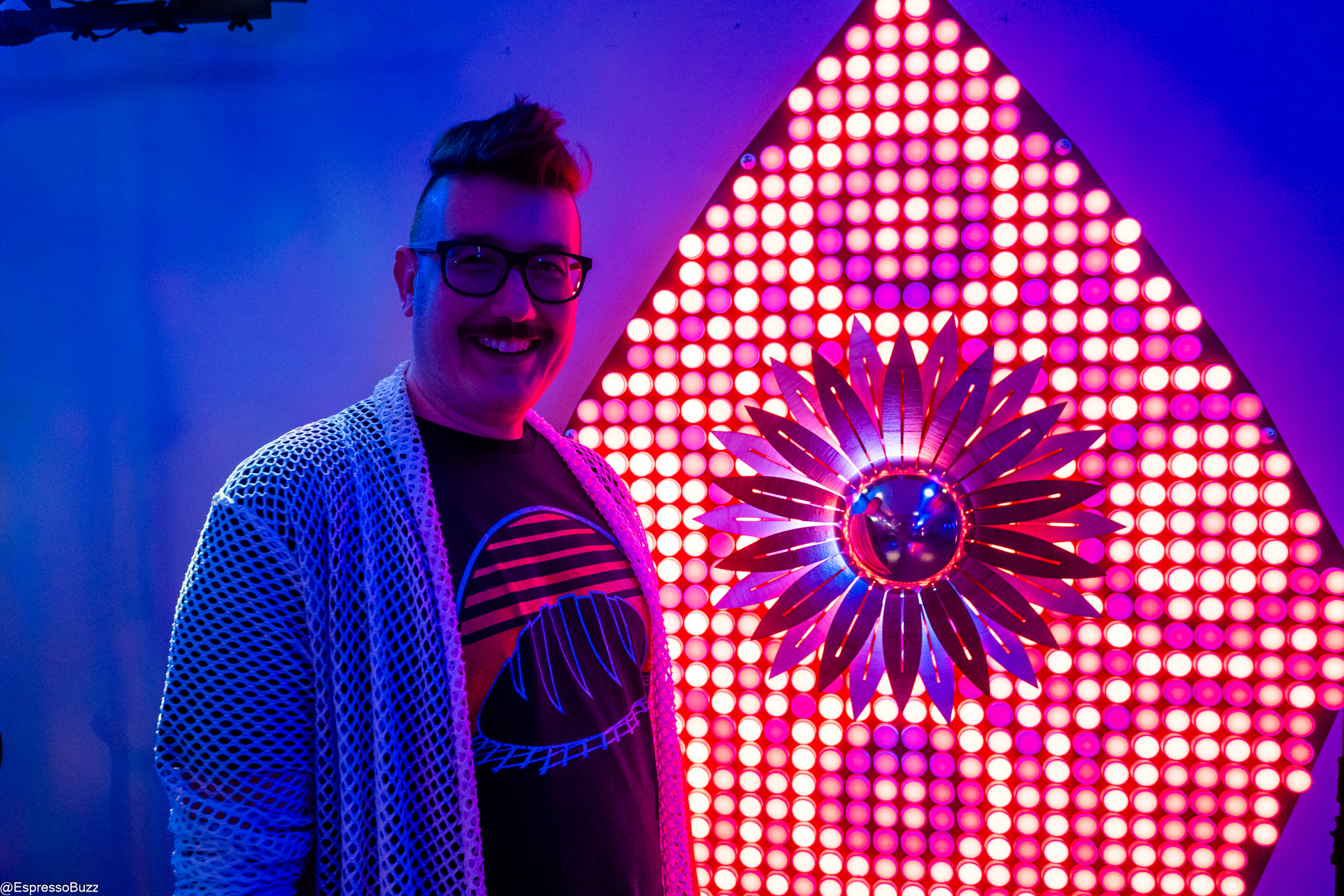
Photo by EspressoBuzz
Critical Northwest 2026
Perceptron has been accepted as placed art at Critical Northwest 2026: Vibrant Resonance. The event runs July 13–19 at Masonic Park in Granite Falls, WA—a week in the forest with the Pacific Northwest’s Burning Man regional community.
This time Perceptron is part of Syzygy, a new theme camp organized with friends from the Critical community. The installation will live in the Well Loop, integrated into the camp rather than standing alone—closer to the vision of a shared, lived-in space that SeaCompression hinted at.
Everything we learned at SeaCompression is feeding into the next iteration: tighter audio-visual sync, refined button mappings, better lighting placement, and a setup designed for the outdoors. Seven nights instead of one. Come find us and press a button.
Fuchsia Bot

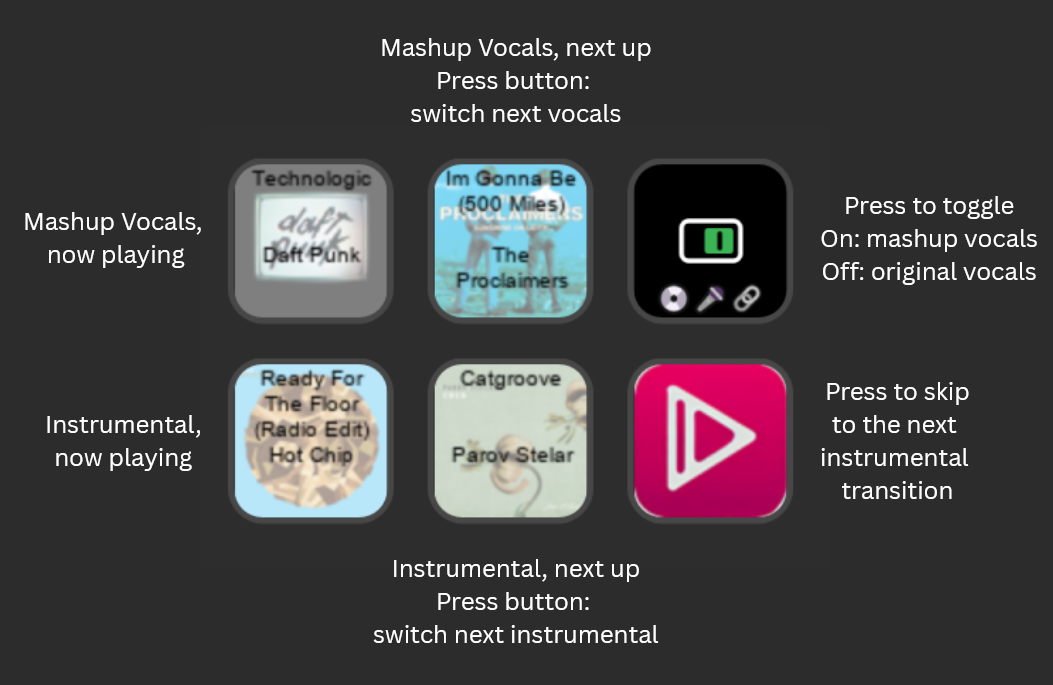
Fuchsia Bot is a hands-on music engine that invites spectators to become participants. Its friendly active buttons make mixing immediate and intuitive: isolate vocals, swap stems and loops, cue transitions, and build playful mashups—no DJ skills required. Every press gives clear audio feedback so people know they’re shaping the sound in real time.
Born as Fuchsia’s evolving performance toolkit and refined across years of community events (a fixture at Critical since 2022), Fuchsia Bot now anchors the sonic side of Perceptron: approachable, responsive, and radically inclusive.
Listen to samples of Fuchsia Bot on SoundCloud →
Fuchsia Bot’s interactive buttons
Ambisphere
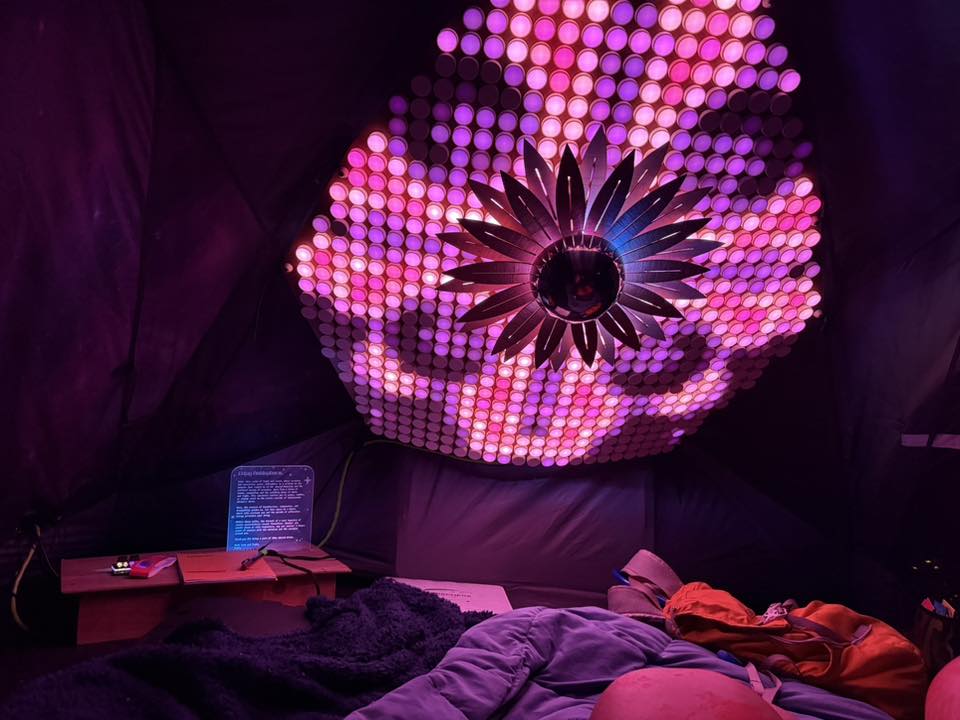
Ambisphere is the visual heart of Perceptron: a reactive focal point that mirrors every touch and musical shift with living light. As participants press Fuchsia Bot’s active buttons, Ambisphere responds in real time—switching scenes, evolving palettes, and pulsing patterns that make the collaboration visible. It’s equal parts beacon and canvas: easy to approach, mesmerizing to watch, and a gentle nudge for spectators to become participants.
Created by Orbit, Ambisphere began as a rogue installation at Critical Northwest in 2024 and returned in 2025 as a placed, granted piece. Its design ethos is inclusive and calming—an ambient environment that supports dancing at the center and relaxing at the edges. In Perceptron, Ambisphere ties the room together: uniting music and motion into a shared, ever-changing atmosphere that grows richer with every person who joins.
See and read more about Ambisphere →
SeaCompression 2025
Perceptron made its public debut on November 8, 2025 at SeaCompression—the Puget Sound’s annual Burning Man decompression event, produced by Ignition Northwest. The 2025 theme was UNITE!, a natural fit: Perceptron was born from uniting two creative paths that found each other at Critical Northwest, and the installation itself unites participants into a shared creative act.
We applied for placed art in September and were selected by the Art Placement team. After some back-and-forth about our space needs—clear audio is essential for Perceptron’s feedback loop to work—we landed a spot in the Main Bar of the Seattle Design Center, tucked beside the large arch windows overlooking the atrium.
The space
The blank canvas: our plot in the Main Bar, Friday evening before load-in.
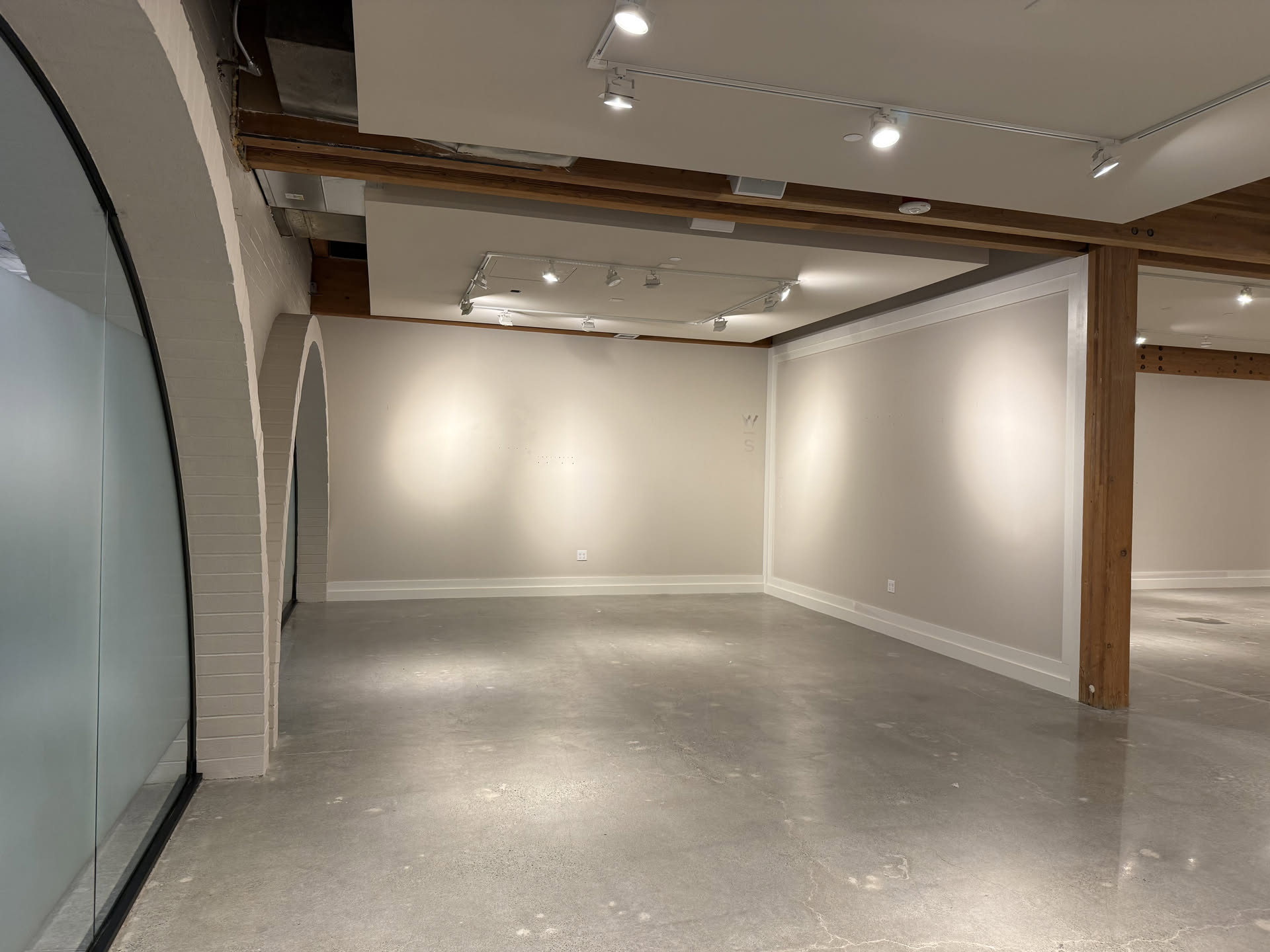
Orbit loaded in Friday evening through the south dock, hauling in lighting rigs, speakers, the Ambisphere panel, and all the cabling. Meanwhile Fuchsia was deep in last-minute software work, pushing a final release of the Fuchsia Bot engine two days before the event—squashing a two-year-old loudness normalization bug and improving the vocal blending algorithm. The space had concrete floors, exposed timber beams, and those beautiful arched windows—a former showroom that would become a dance floor by Saturday afternoon.
The laser-etched Perceptron sign, tested at home the night before.
Building Perceptron
By Friday night, the bones were in place: PAR lights on tripods ringing the space, the mirror ball casting scattered light across the walls, Ambisphere mounted on the back wall, JBL Partybox speakers flanking the equipment tables, and the inflatable couch in the corner for cushy seating. A galaxy-print tapestry draped over the tables tied the aesthetic together.
Friday night: setup coming together, cables still on the floor.
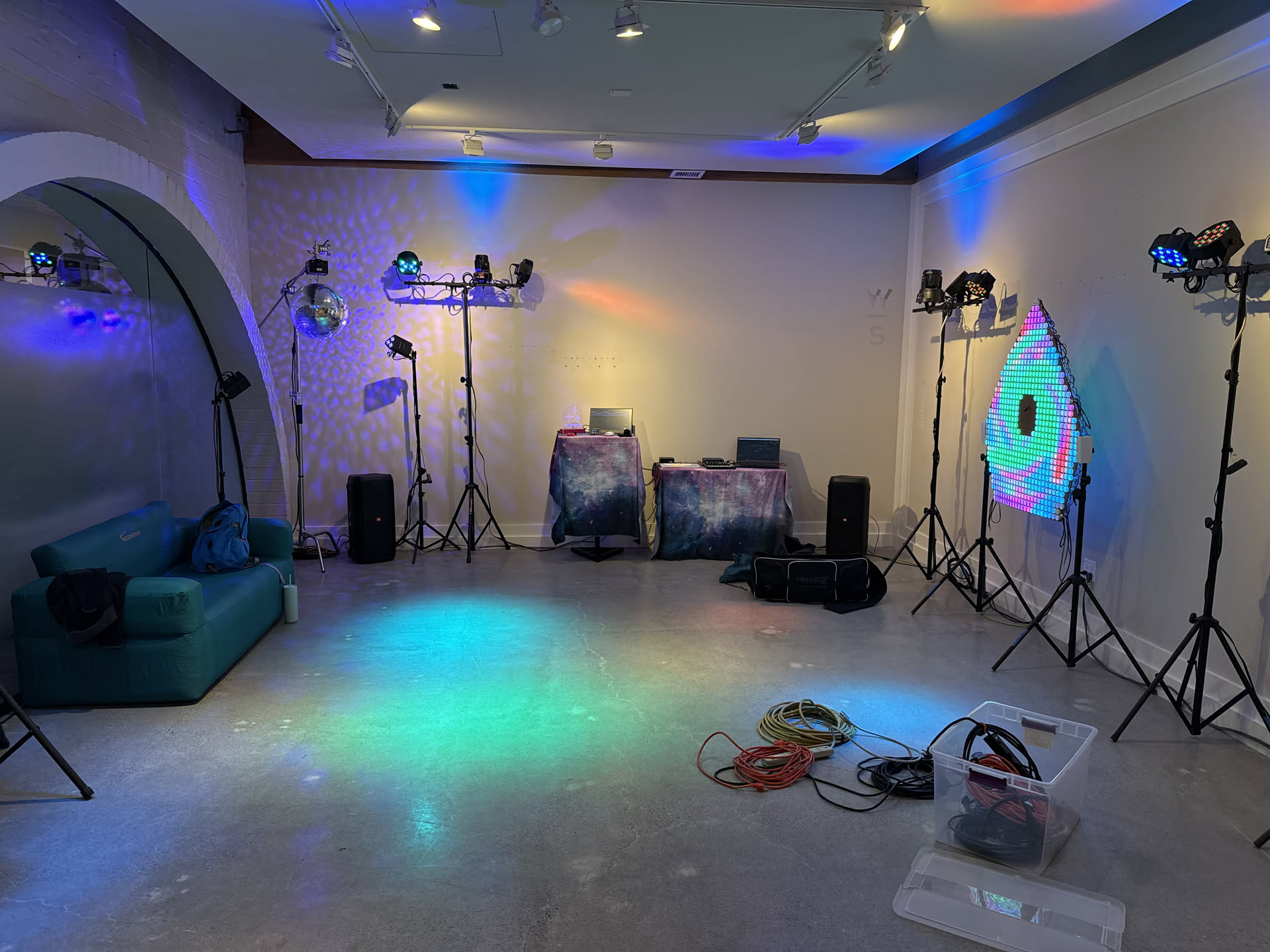
On Saturday morning, Fuchsia arrived and the two of us spent the afternoon calibrating audio levels, tuning the Stream Deck button mappings, and aligning Fuchsia Bot’s output with the room acoustics. A last-minute bug surfaced—the software kept thinking there were no song candidates—but Fuchsia had already fixed it in the latest branch. She rolled the patch, tested it on the spot, and we were live. The collaboration pattern that would define the night was already visible: Fuchsia owning the sonic engine, Orbit owning the visual environment, both shaping the same space.
The night
Doors opened at 2 PM. By late afternoon, the overhead house lights were off and Perceptron was alive—mirror ball refractions dancing across the walls, Ambisphere cycling through reactive color palettes, and the sound system filling the room with participant-created mashups.
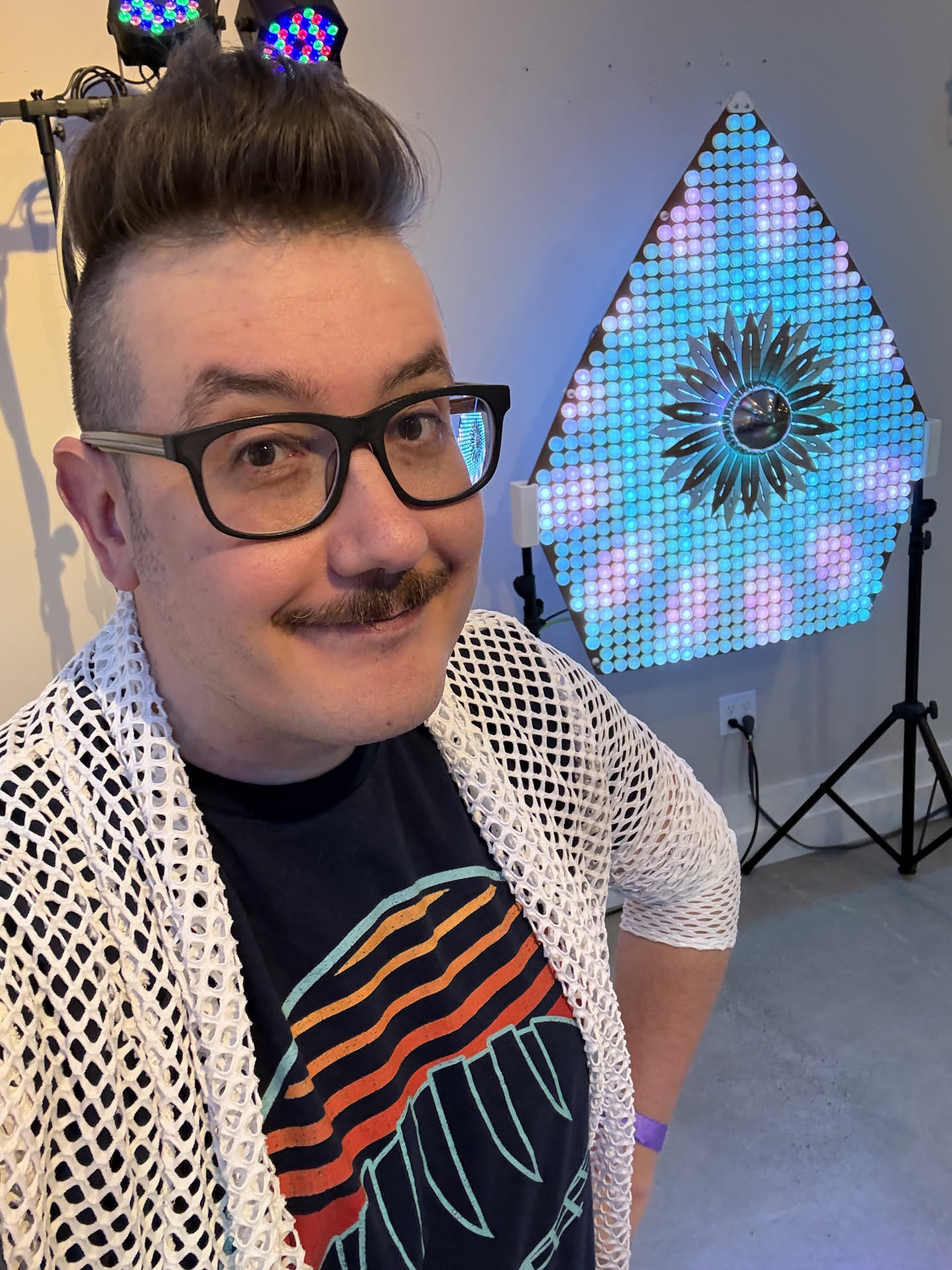
Orbit in the glow, ready for the night ahead.
The full installation, lit and running.
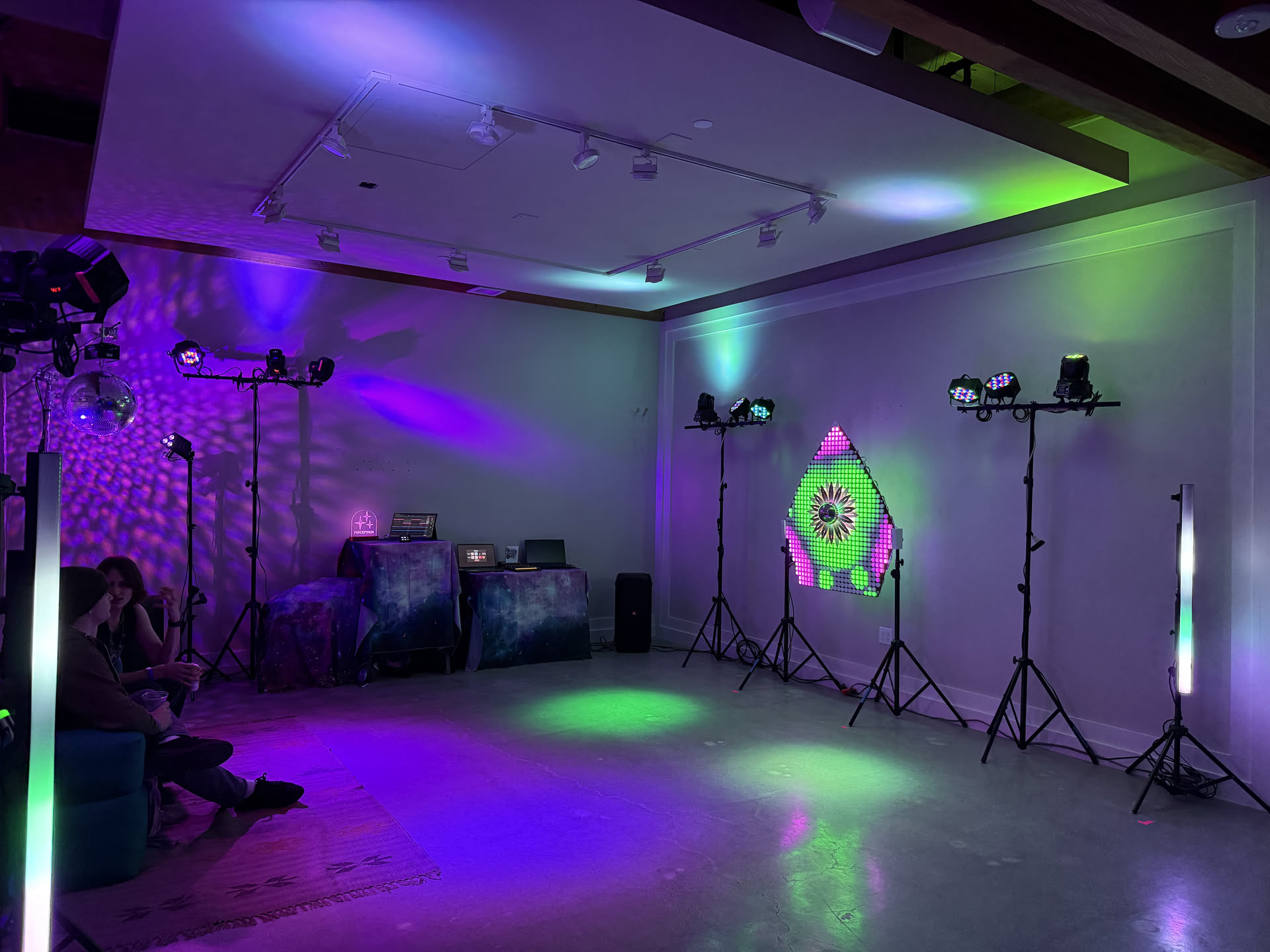
As the evening deepened and the crowd grew, people found their way to the buttons. Fuchsia floated between the equipment tables and the dance floor—cueing up new track banks, watching how participants interacted with the button mappings, and quietly adjusting the mix when a mashup went sideways. Some people approached tentatively, pressing one button and watching Ambisphere shift in response—then pressing another, and another, realizing they were driving the whole room. Others jumped straight in, flipping stems and building unexpected mashups while their friends danced. Fuchsia’s years of refining Fuchsia Bot for exactly this scenario showed: the software handled gracefully whatever participants threw at it. No instructions needed, no barrier to entry, just an invitation answered by light and sound.
Late into the night, as the broader event pulsed around us, Perceptron settled into its groove. Fuchsia and Orbit took turns stepping away to explore SeaCompression, trusting the installation to hold its own—and it did. The room cycled through waves of energy—sometimes a packed dance floor, sometimes a pair of strangers discovering the buttons together, sometimes just Ambisphere and the music breathing on their own. The arch windows caught reflections from the atrium stages, layering Perceptron’s light with the glow of the larger event.
Afterward
SeaCompression ran until 2 AM. We struck the installation Sunday morning. Both of us were completely drained—Fuchsia running on about three hours of sleep and adrenaline, Orbit taking several days to fully recover. Worth it.
Perceptron proved something at SeaCompression that we’d believed but hadn’t tested at scale: that the combination of approachable music controls and reactive visual feedback creates a space where strangers genuinely co-create. The “I’m in control” feedback loop—press a button, hear the music shift, see the lights respond—drew people in and kept them playing. No one needed to be told what to do.